


Technology

At the National Association for College Admission Counseling conference, admissions officials from Rice University, the University of Michigan, and the University of Georgia discussed their approaches to supplemental essays and materials. Rice requires three additional writing prompts and a creative image, while Michigan requires multiple essays and a portfolio for its business school, investing significant time and money in review. Georgia, however, is eliminating its supplemental essay for fall 2027 and beyond to ease the burden on staff and applicants. All three institutions do not use AI to read applications or AI detection software, citing concerns about false positives and the reflective nature of essay writing.

EdTech company Chegg announced in late October 2025 that it would lay off 388 employees, about 45% of its total workforce, expecting to save up to $110 million in the next fiscal year. The company also announced that after evaluating strategic options, it decided to remain independent and publicly traded, and adjusted its management, with Executive Chairman Dan Rosensweig returning as CEO. This restructuring stems from the impact of artificial intelligence on its traditional tutoring business, and the company plans to pivot toward B2B skills courses.

Artificial intelligence (AI) is rapidly transforming higher education, bringing new opportunities for learning, research, admissions, and operations, but whether campus infrastructure can reliably, securely, and at scale support AI has become a focal point. This article explores the shift of infrastructure from the background to a strategic core, and how universities can address challenges through centralized monitoring, cross-team collaboration, and DCIM software.
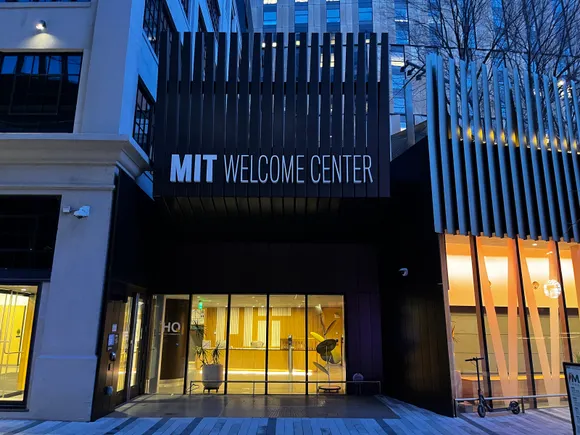
The Massachusetts Institute of Technology (MIT) released a report stating that artificial intelligence can provide reasonable solutions for almost all written assignments in undergraduate courses, recommending that the university accelerate the course adjustment process and oppose reliance on AI detection tools.
The U.S. Department of Justice on Tuesday unsealed a superseding indictment charging 17 members of the Mabna Institute, an Iranian organization allegedly operating on behalf of the Islamic Revolutionary Guard Corps (IRGC), in a coordinated cyberattack campaign. The group is accused of hacking into 144 U.S. universities, 42 U.S. private sector companies, and at least five federal and state agencies since 2013, stealing more than 31TB of academic data and intellectual property. The charges expand on a 2018 case and highlight a broader state-sponsored effort to steal research and intellectual property. The State Department is offering a $10 million reward for information leading to the location of five defendants, including Behzad Mesri, who was previously charged in connection with the HBO hack.
A recent survey released by education technology company Instructure shows that 90% of college students use artificial intelligence in the classroom at least occasionally, and 61% of college instructors engage in similar behavior. However, instructor training lags significantly behind: only 11% of college instructors have received comprehensive AI training, and 41% say they have received no formal training. The survey also found that all groups generally expect schools to provide education on AI ethics and literacy, while concerns about AI reliability persist.

Educational nonprofit ETS announced the acquisition of ACT, with the deal expected to close on July 1. The combined entity will serve 35 million people annually, coinciding with many universities reinstating standardized testing requirements. ETS will gain ACT's programs such as WorkKeys and plans to maintain its for-profit nature while operating with a mission-driven approach.

Google's threat intelligence team and Mandiant released a report on Thursday stating that the hacker group ShinyHunters exploited Oracle PeopleSoft software vulnerabilities to attack more than 100 organizations worldwide between May 27 and June 9, with 68% being higher education institutions. Many institutions successfully defended, but some had data stolen and made public. The University of Nottingham has confirmed that its student records system was compromised, with a large amount of data potentially leaked.

The rise of artificial intelligence has brought higher education to a crossroads, making a paradigm shift imperative. Paul A. Pavlou, Dean of the Patti and Allan Herbert Business School at the University of Miami (Miami Herbert Business School), points out that universities aspiring to lead in the new landscape shaped by AI must reimagine higher education as a hyper-personalized student journey empowered end-to-end by AI, interactive data, predictive analytics, and adaptive technologies. Through initiatives such as curriculum redesign, industry partnerships, AI minors and majors, and the "Miami Method," the school deeply integrates AI into the educational experience while emphasizing "human judgment in the AI era," cultivating future leaders with critical thinking and judgment who can explain, defend, or override AI outputs.

The University of Miami School of Nursing and Health Studies is leveraging cutting-edge technologies, including AI agents, holographic patients, and immersive spaces, to transform nursing education. Under the leadership of Associate Dean Frank Guido-Sanz, the school utilizes a 41,000-square-foot simulation hospital, combining AI tools and holographic technology to enhance students' clinical judgment, teamwork, and systems thinking, aiming to address the nursing shortage and accelerate clinical readiness.