


Latest news

U.S. community colleges face financial pressures, and Colorado's Aurora Community College, through a comprehensive academic portfolio review, eliminated over 30 degree and certificate programs, shifting focus to high-demand fields to promote economic mobility through program depth.

Against the backdrop of some universities attempting to restrict discussions of sensitive topics in the classroom, institutions like Marquette University are systematically developing students' capacity for difficult conversations through required courses and dialogue programs. This article reviews related practices, outcomes, and challenges.

EdTech company Instructure reached an 'agreement' with threat actors on Monday following two cyber intrusions into its Canvas learning management system. The company stated that stolen data has been returned and digital destruction confirmed, but cybersecurity experts caution that paying a ransom does not ensure data is completely erased. Meanwhile, multiple class-action lawsuits have been filed, and industry organizations are calling for strengthened federal and state-level cybersecurity support for education.

New York University (NYU) President Linda G. Mills and State University of New York (SUNY) Chancellor John B. King Jr. jointly announced that the two institutions will create the Higher Education Design Laboratory to systematically evaluate the actual impact of various interventions on students' post-graduation adaptability and long-term development. The laboratory will initially focus on the two institutions themselves, with plans to expand to more universities, research centers, and government partners in the future.
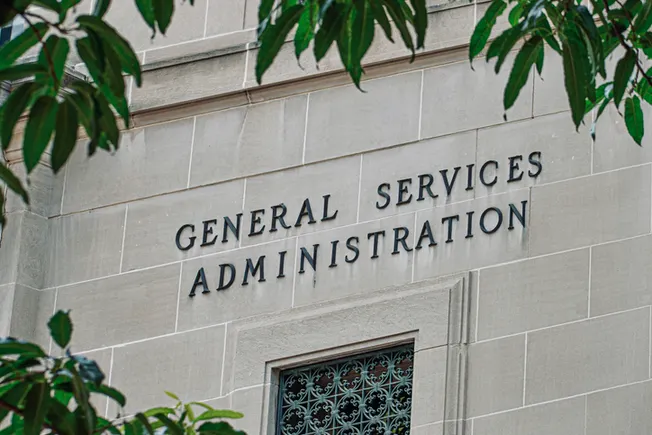
In January, the U.S. General Services Administration (GSA) proposed requiring all federal fund recipients, including universities, to certify compliance with the government's anti-DEI executive orders and guidance, or face the potential loss of all federal funding. The proposal has sparked strong opposition in higher education, with multiple groups urging its withdrawal and anticipating legal challenges. Experts note that the certification requirements may involve issues such as personal liability and conflicts with state laws, raising doubts about their legal foundation.

Multiple Republican-led states are pushing legislation to allow public universities to shift to accreditation by the newly established Council for Public Higher Education (CPHE). Funded by Florida and the Trump administration, the body's governance model raises concerns over conflicts of interest and academic freedom. CPHE plans to apply for federal recognition by the end of 2027, with 10 institutions already joining its initial accreditation cohort.
With the widespread application of artificial intelligence across various industries, many U.S. universities have launched AI ethics courses, certificates, and master's programs, aiming to cultivate professionals capable of identifying and mitigating AI risks. Institutions such as San Francisco State University, the University of Florida, and Baylor University have successively offered related courses, emphasizing interdisciplinary education to address the ethical challenges posed by AI.

Universities nationwide face budget pressure, and administrators commonly attempt to use financial metrics to decide whether to keep or eliminate programs. However, issues such as cost allocation, revenue attribution, and cross-subsidization of research funding make accounting far from an exact science. The controversy over cuts at the University of Nebraska-Lincoln and legislative mandates in Ohio and Indiana highlight the limitations of metrics and their conflict with educational missions.

Indiana University has disciplined at least two professors under state law SB 202, raising concerns about academic freedom and freedom of speech. The law requires public universities to establish complaint systems and periodically review tenured professors. Critics argue the law is vague and suppresses dissent, while supporters say it ensures students are exposed to diverse viewpoints.

Cindy Meis, Director of Career Services at the Tippie College of Business, University of Iowa, points out that 61% of 'entry-level' positions require more than three years of experience, which is not truly entry-level. She advocates distinguishing between 'entry-level' and 'early-career' positions and recommends that employers recognize experience students gain from internships, student organizations, and project work, to remove hiring barriers.